Discover how Uber Engineering uses Ansible® to automate configuration management for its global enterprise network.
Enterprise networks must ensure seamless uptime while handling daily operational updates.
At Uber, we maintain connectivity for all our offices spread across six continents (Asia, Africa, North America, South America, Europe, and Australia/Oceania), with thousands of engineers accessing it daily.
This is part 4 in our series about Spotify's journey with background coding agents (internal codename: “Honk”) and the future of large-scale software maintenance. See also , , and .
See also part 1 , part 2 , and part 3 .
In Part 2, we explored how we enabled our Fleet Management tools to use agents to rewrite our software automatically.
At Spotify, data problems used to follow a specific pattern. You'd look for the relevant dashboard, there weren't any. You'd message the corresponding data expert on Slack, wait until they had time to help. But with tho…
You'd look for the relevant dashboard, there weren't any.
You'd message the corresponding data expert on Slack, wait until they had time to help.
What happens when coding stops being the bottleneck? At Spotify, we’re starting to find out.
At Spotify, we’re starting to find out.
Niklas Gustavsson, Spotify’s Chief Architect and VP of Engineering, recently shared how our yearslong investment in internal development platforms and engineering best practices is driving our AI transition — enabling b…
Discover how Uber engineered a highly scalable feature logging pipeline to ensure data consistency for training/serving and boost performance for large-scale models. #MachineLearning #MLOps #UberEngineering #DataEnginee…
Our goal is to make the features used at inference the same features that are used to train the next model iteration.
The single source of truth for features leads to stronger model performance and faster detection and remediation of issues.
Interactive refactoring in gopls , 16 October 2026 Hongxiang Jiang Introducing interactive refactoring in gopls and the LSP: a new capability that brings dynamic, multi-step refactorings into your favorite editor.
Better HTTP/1 connection reuse , 14 October 2026 Nicholas Husin and Damien Neil Go 1.27 includes a change to the HTTP client that can make programs sending many sequential HTTP/1 requests significantly faster.
Arch-specific SIMD in Go , 2 October 2026 Junyang Shao and David Chase Go 1.27 introduces experimental arch-specific SIMD vector APIs Platform-independent SIMD in Go , 24 September 2026 David Chase and Junyang Shao Go 1…
Quality and reliability have always been a point of pride for Spotify. We run an extraordinarily complex ecosystem of interconnected microservices and data pipelines that all come together in a super app for across more…
We run an extraordinarily complex ecosystem of interconnected microservices and data pipelines that all come together in a super app for 777 million monthly active users across more than 2,000 supported devices .
At any given moment, our platform serves around 100 million concurrent clients , processes 11-12 million backend requests per second, and runs nearly 3,000 production services.
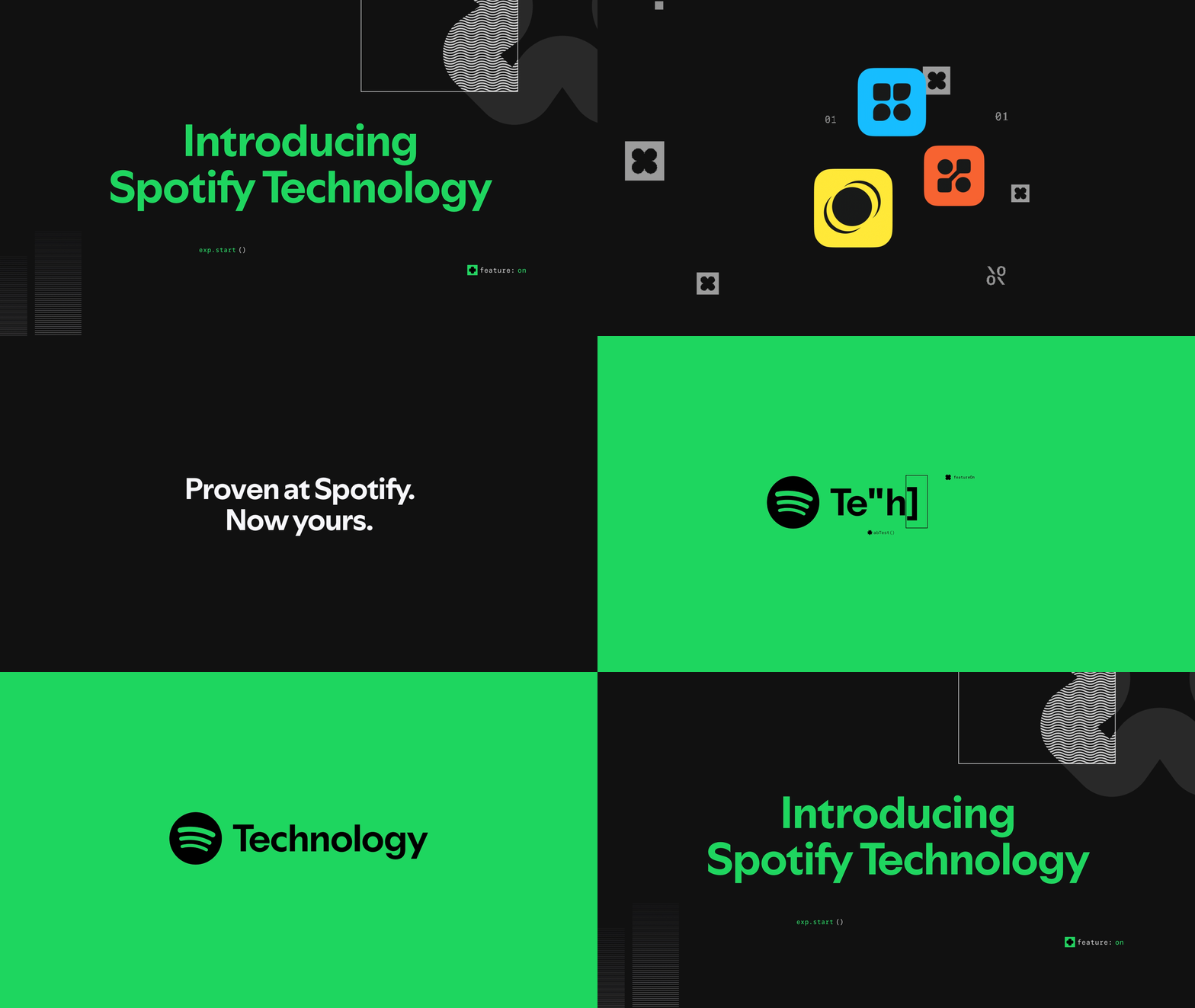
Today Spotify is introducing Spotify Technology - a home for everything we've built to help R&D organizations build, ship, and learn, faster. Portal. Confidence. Xirp. Spotify for Backstage. They were always designed to…
They were always designed to work as a system.
Now they live under one roof, and we have more to share.
Go 1.26 simplifies type construction and enhances cycle detection for certain kinds of recursive types.
Go’s static typing is an important part of why Go is a good fit for production systems that have to be robust and reliable.
When a Go package is compiled, it is first parsed—meaning that the Go source code within that package is converted into an abstract syntax tree (or AST).
Meet Odin’s hybrid core allocation: CPU when you need it, elastic sharing when you don’t—built for efficient scaling.
Some time ago, we introduced cpusets into Odin, Uber’s stateful container orchestration system.
This change gives us stricter control over how CPU time is allocated, which helps cut down on throttling, and reduces latency, but comes at the cost of assigning full dedicated CPUs.
Building a slide template starts with three foundational choices — colours, fonts and layouts.
This article covers the basics of colour theory and how to build a reusable palette, the essentials of typography, including serif, sans-serif, handwritten and monospace fonts, plus the finer points of kerning and leadi…
Sumeet is the global head of culture and organisational design at Thoughtworks.
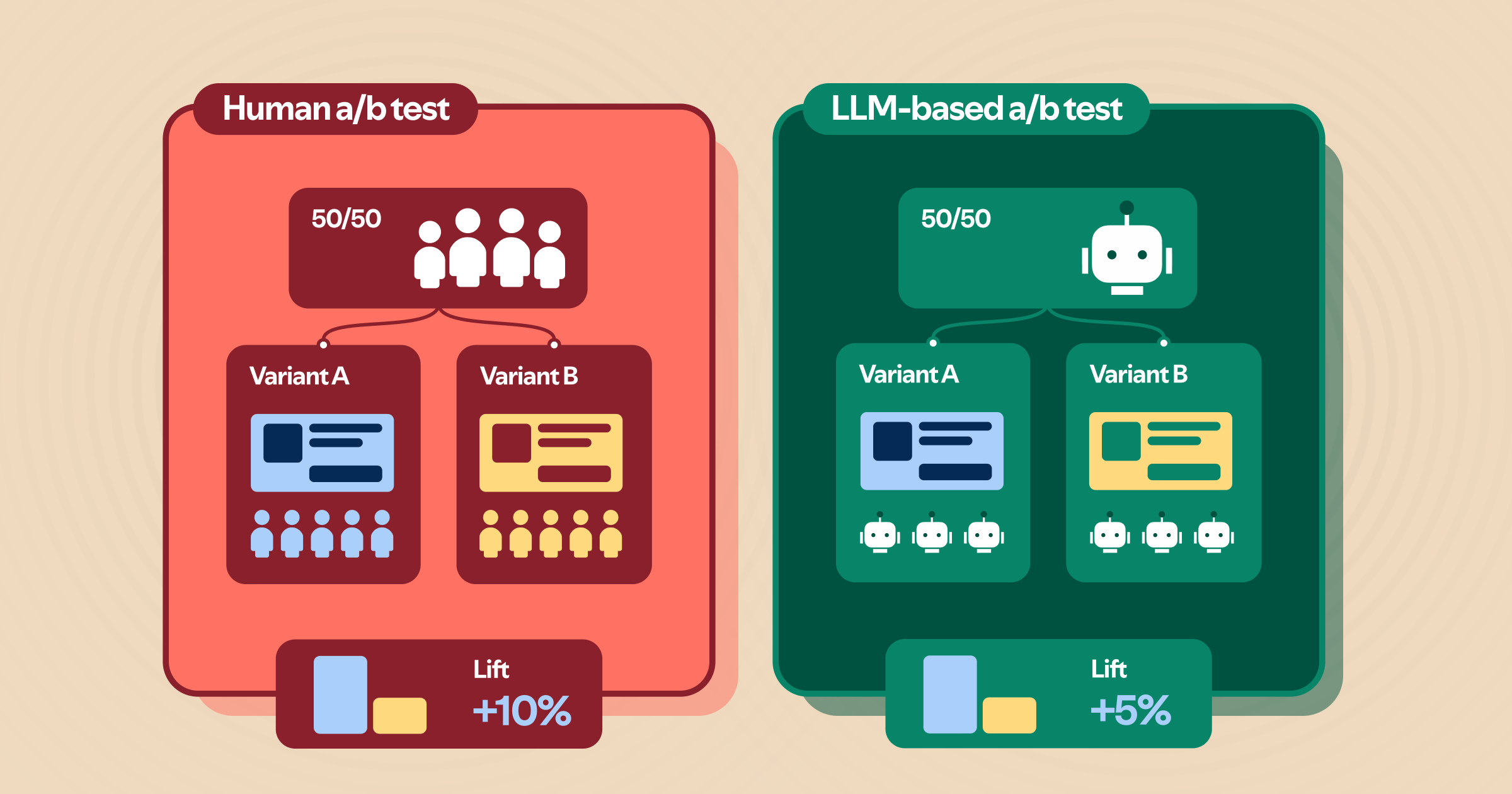
TL;DR: LLM predictions can stand in for human outcomes in A/B tests, but only by assumption, not by design. In an application to the Upworthy dataset with thousands of A/B tests, calibrating LLM outputs against human da…
In an application to the Upworthy dataset with thousands of A/B tests, calibrating LLM outputs against human data recovered the treatment effect, but only using a specific set of methods.
The conditions that make this work cannot be verified for new treatments, and they become less plausible the further the new treatment is from past experiments.
Go 1.27 adds an experimental platform-agnostic SIMD API
Go 1.26 and 1.27 include experimental APIs for Single Instruction Multiple Data (SIMD) operations.
SIMD is a native feature of many modern CPUs that allows software to perform uniform operations across vectors of data very quickly, such as adding 8 pairs of float64 values in a single instruction.
A Sensible Default is a practice that, absent some overriding context, should be used when carrying out a certain kind of task.
In software development such sensible defaults might include things like “use version control”, “separate UI logic from domain logic”, “automate deployment pipelines”.
The term “sensible default” is a deliberate contrast to “best practice”.
Go 1.27 adds generic methods—a highly desired language feature.
Generics was a profound change for Go—it fundamentally expanded the kinds of programs that gophers could write by adding type parameters to the language.
One could now express generic types and functions in Go.
Effective writing from a practitioner is a style distinct from academic writing or thought-leadership content.
It relies on authority from experience (not credentials), naming tensions but letting them live, keeping the author in the writing, and the expectation that readers recognize the pattern from their own experience.
Jim has worked across just about every role in tech—from coding and product design to senior management and executive consulting.
TL;DR LLM evals, automated judges that assess relevance, coherence, and quality at scale, are a powerful new tool. Paired with online experiments, they raise the hit rate of what we test and create a feedback loop that…
Paired with online experiments, they raise the hit rate of what we test and create a feedback loop that makes both evals and experiments smarter over time.
At Spotify, only about 12% of A/B tests end in a shipped positive result.
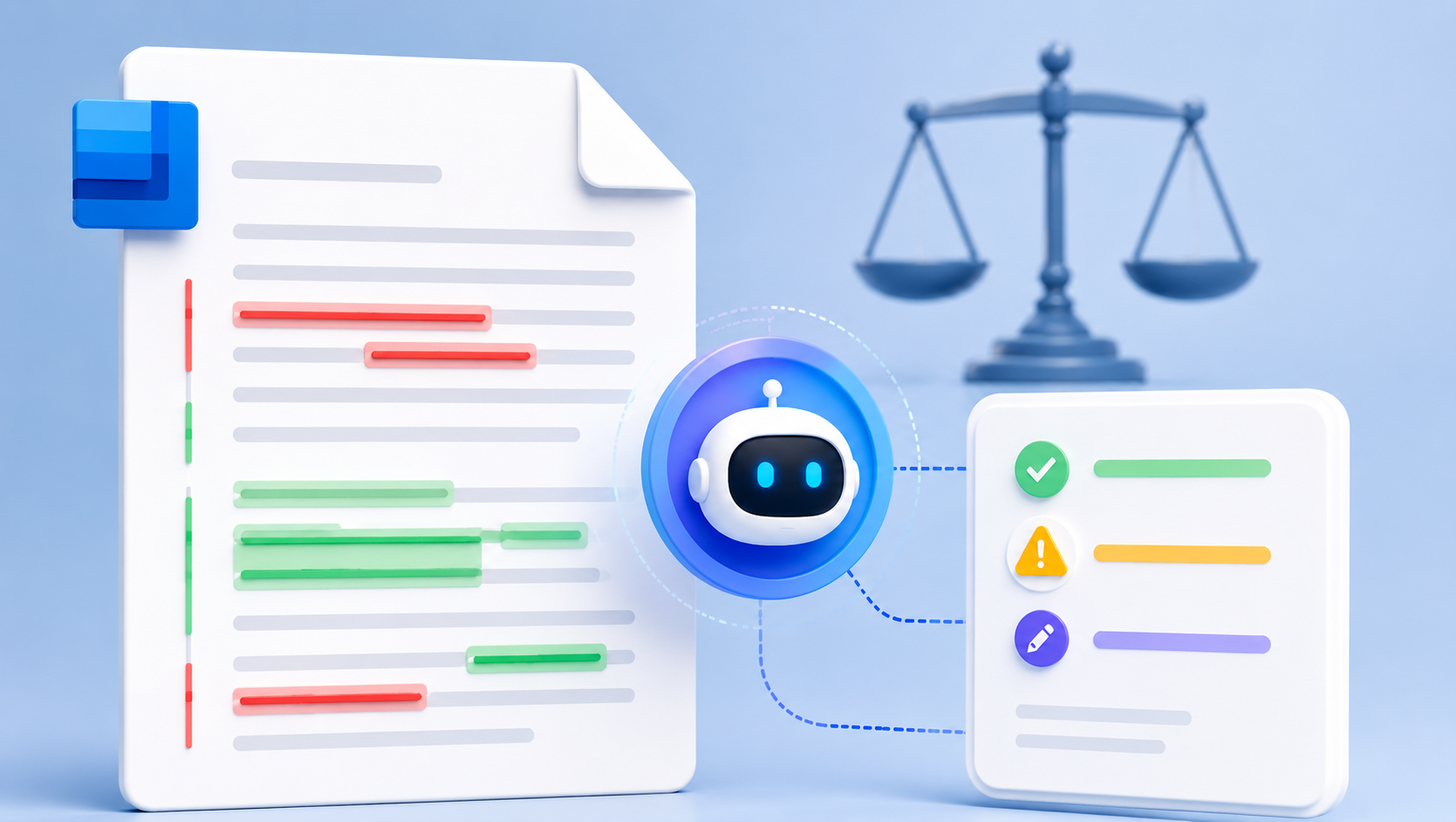
Dive into how Uber’s Legal Team is leveraging Agentic AI to help lawyers review contracts faster, flag risks, and improve every negotiation.
Legal Director, Product Legal (Mobility & Platform) Few domains demand as much precision and care as legal work, making it a hard test for putting an AI agent into daily practice.
Beginning in early 2024 and continuing through 2025, before today’s agent harnesses were widely available, Uber built the first generation of our Legal Redlining Agent (LRA).
Not every presentation needs slides, but when they earn their place, they work as a visual channel that complements the speaker rather than replacing them.
This article sets out the principles that follow from that idea — control over the rate of knowledge exposition, tight coupling between slides and speaker, minimalism by default, visuals that say more than words can, an…
Sumeet is the global head of culture and organisational design at Thoughtworks.