GitHub has released Actions Runner Controller (ARC) 0.15.0, introducing reliability, scalability, and observability improvements for organisations running self-hosted GitHub Actions runners on Kuberne
InfoQ Homepage News GitHub Actions Runner Controller 0.15.0 Targets Reliability at Scale GitHub has released Actions Runner Controller (ARC) 0.15.0 , introducing reliability, scalability, and observability improvements…
The October 1 release focuses on reducing unnecessary Kubernetes API requests, improving controller throughput and making upgrades and shutdowns more predictable, particularly for environments managing large numbers of…
Design systems thrive on consistency, so where does randomness fit in? Through playful demos of organic typography, bouncing letters, and splayed cards, Brecht De Ruyte shows how the new CSS `random()` function brings a…
Brecht De Ruyte is a self-taught front-end developer located in Belgium with a passion for UX and Design.
After more than a decade of working in tech, he … More about Brecht ↬ Weekly tips on front-end & UX .
Announcing native PyTorch backends for vLLM and SGLang on Google Cloud TPUs, powered by TorchTPU and TPU Sync for high-performance inference.
As part of our broader announcements for PyTorch today, we are excited to launch native PyTorch backends for vLLM (developed in partnership with Inferact) and SGLang (developed in partnership with RadixArk).
For years, TPUs have powered large-scale AI workloads with high performance and efficiency.
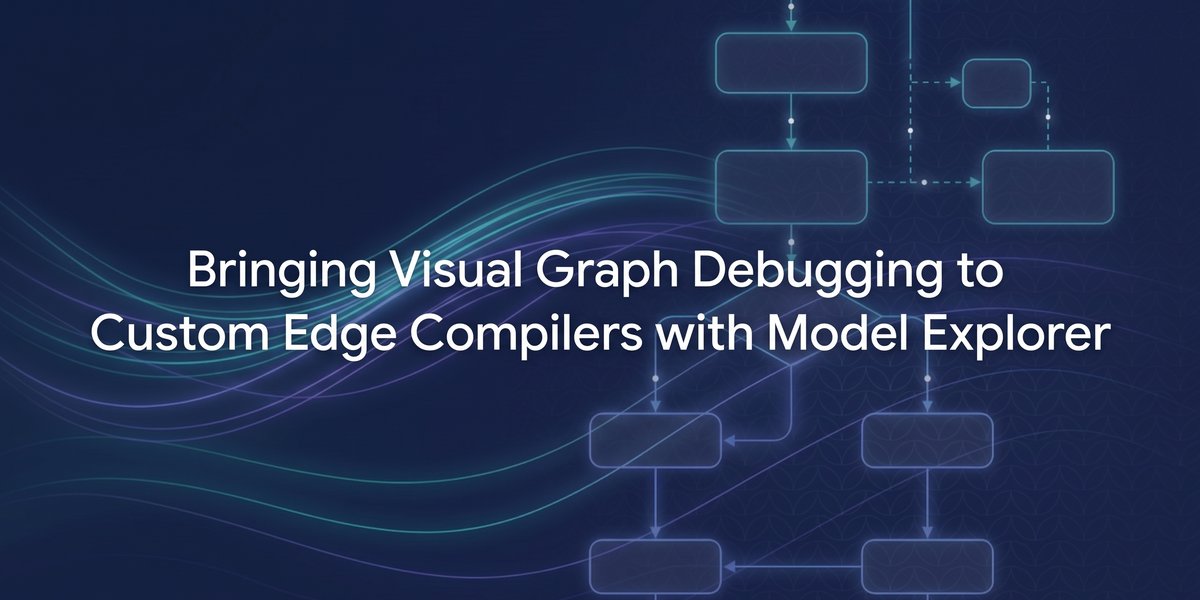
Learn how Arm used Google AI Edge Model Explorer to inspect custom compiler IRs, verify NPU delegation, and map cycle-level profiling traces.
Model Explorer goes beyond high-level model graphs.
See how Arm plugs in custom compiler IRs, verifies NPU delegation side-by-side, and maps cycle-level profiling traces directly onto your execution graph.
Learn how TorchTitan and TorchTPU enable seamless, high-performance distributed AI model training on Google Cloud TPUs with native PyTorch support.
Over the past years, Meta’s TorchTitan has emerged as the PyTorch ecosystem’s premier clean-room reference platform for large-scale generative AI model training.
Built entirely on PyTorch-native scaling primitives, TorchTitan provides an unencumbered, highly modular showcase for pre-training flagship dense and Mixture-of-Experts (MoE) architectures like Llama 3, Qwen 3, and FLUX.
Google Research announces the complete 32-bit Coral NPU RISC-V architecture, v1.0 IREE/MLIR compiler, and new commercial hardware with Synaptics.
Some of the most compelling use cases for AI are happening directly on the devices around us.
You see it first in personal devices like wearables that need to understand context in real time, and increasingly in enterprise and industrial systems like autonomous robots and smart sensors.
News and views from members of the Java team at Oracle Java’s code reflection API, developed in OpenJDK Project Babylon, opens a new path to targeting foreign programming models directly from Java—including GPUs.
This talk introduces the Heterogeneous Accelerator Toolkit (HAT), a Java parallel programming framework that accelerates modern workloads on specialised hardware through three core stages: reflect, transform, and accele…
We begin with the basics of code reflection and its key concepts, making the session accessible to developers new to the API.
Learn when to use RUM and synthetic monitoring for SLIs, what each source misses, and how to interpret their results together.
Well-designed service level objectives (SLOs) help you track the benchmarks your app needs to meet to deliver a successful user experience (UX).
To track performance against these SLOs, many SRE teams are turning to real user monitoring (RUM) and synthetic monitoring for their service level indicators (SLIs) , as these forms of data provide more direct measureme…
This week's Java roundup for October 12th, 2026, features news highlighting: three OpenJDK JEPs targeted for JDK 28; the October 2026 edition of Azul Payara; point releases of Gatherers4j, Yupiik Fusi
InfoQ Homepage News Java News Roundup: JEPs for JDK 28, Azul Payara, Gatherers4j, Google ADK, Yupiik, Apache Camel CVEs This week's Java roundup for October 12th, 2026, features news highlighting: three OpenJDK JEPs tar…
JEP 546, Adaptive Heap Sizing for ZGC , has been elevated from Proposed to Target to Targeted for JDK 28.
When our AI code reviewer's cost per run doubled, we dug into the token usage to find out why. Learn how we used prompt caching and intelligent model routing to slash our inference bill by 68% while speeding up reviews.
When we previously blogged about our AI code reviewer in April , an average review cost a palatable $1.19.
By the end of August, that figure had shot up to about $2.46.
Clairic is a new model from Cloudflare that is a System One extraction modeI, capable of extracting, computing, estimating, and forecasting data from unstructured inputs.
Today, we're announcing a preview of a new class of System One-style models: extraction models.
Our first one, Clairic, is available hosted on Workers AI as @cf/cloudflare/clairic.
Many Windows applications expect to run on a machine that belongs to an Active Directory domain.
Think of an intranet site that signs users in with Windows Integrated Authentication, a service that connects to SQL Server with Windows authentication instead of a connection-string password, an application that reads…
All of these depend on the instance itself being a domain member.
Generative Recommenders (GenRecs) represent a paradigm shift from scoring every ad to reasoning about ad content and user preferences together in order to predict the best outcome for advertisers.
Leveraging the world knowledge built into LLMs makes ad matching more intelligent and precise, compounding gains for advertisers.
GenRecs Tokenization is the foundational data representation that makes this possible.
NDS.Live development at HERE Technologies demands that dozens of interdependent schema definitions stay consistent with every customer requirement, and agentic AI is how we’re meeting that challenge.
HERE’s mission is to deliver a unified map for our automotive customers, and central to this mission is the Navigation Data Standard (NDS).
NDS is the global industry standard for map data formats.
Sometimes, giving an AI agent all of the knowledge it needs is the wrong approach.
At Meta, we’ve seen notable improvements in efficiency and accuracy by keeping the orchestration layer of our data pipeline agents deliberately thin: It routes work and enforces reliability checks, while specialized age…
We’re sharing our own process and insights, plus how any team can apply this to their production AI agents.
Pinterest has introduced event time-based partition finalization for its database ingestion framework. The mechanism uses Apache Flink to track event time and Apache Iceberg metadata to publish a non-
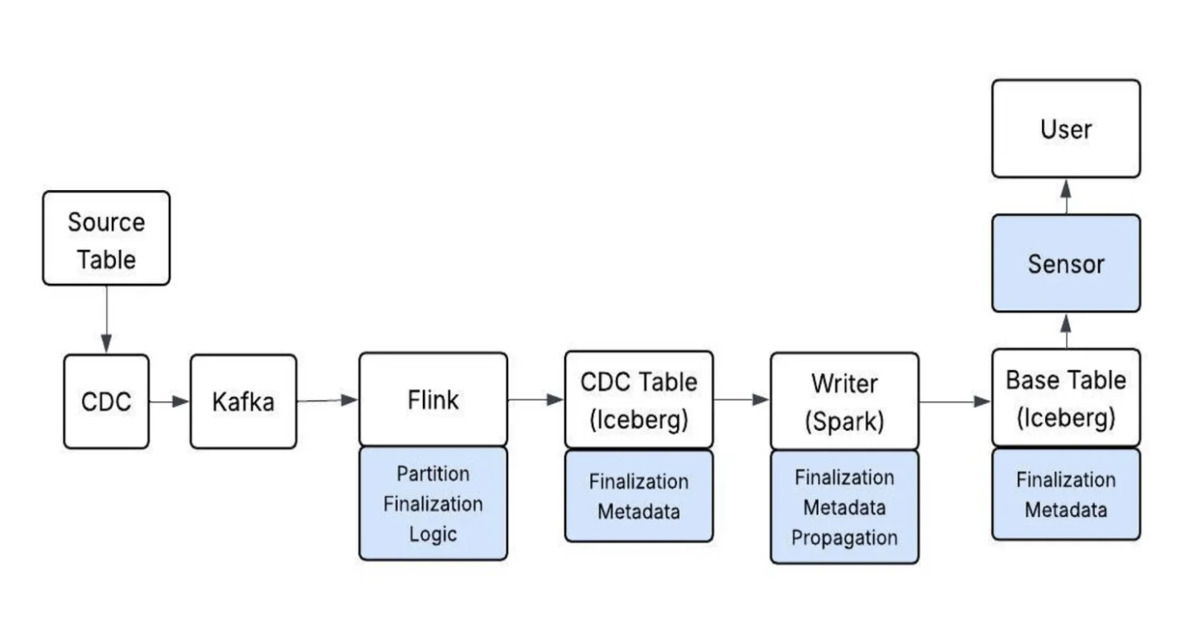
InfoQ Homepage News Pinterest Uses Event Time Watermarks to Finalize Petabyte Scale Data Partitions Pinterest has introduced an event time-based partition finalization mechanism for its next-generation database ingestio…
The approach uses Apache Flink to measure event time progress and Apache Iceberg metadata to publish a non-regressing finalization watermark, addressing a challenge in continuous Change Data Capture (CDC) ingestion wher…
JDK 28 finalizes structured concurrency through JEP 543, with no API changes from JDK 27. Teams on JDK 27 only need to drop --enable-preview and recompile. Code written for JDK 25 or 26 must adapt to
InfoQ Homepage News JEP 543 Finalizes Structured Concurrency in JDK 28, Ending Seven Preview Rounds JEP 543, Structured Concurrency , has been integrated into JDK 28, bringing the StructuredTaskScope API in java.util.co…
For codebases already on JDK 27, the migration comes down to recompiling without --enable-preview .
Learn about significant updates to the Clang bytecode interpreter, with roughly 640 new commits since the previous report. Improvements include support for virtual bases, proper dynamic_cast handling, and the use of tai…
Since my previous article , there have been roughly 640 new commits to the Clang bytecode interpreter.
Apart from the usual bug fixes, performance improvements, and smaller refactoring, the work resulted in these changes: Support for virtual bases (both interpreters) Support for expansion statements in constant expressio…